| |
|
 | |
| Online Flora of the Maltese Islands by Stephen Mifsud |
|
| |
|
|
 |  |  |  |
| External Links: |
|
Silene colorata (Pink pirouette) |

Silene colorata (CARYOPHYLLACEAE.)
Images for this profile are taken from the Maltese Islands after year 2000.
Website launch: Oct-2002
Taxonomic update: Aug-2026
Code update: Jul-2026 |
|
| Nomenclature |
Species name : | Silene colorata Poir. | Authority : | Jean Louis Marie Poiret, France, (1755 - 1834) | Synonyms :
(basionym or principal syn.) |
|
Plant Family : | Caryophyllaceae Juss.
(Pink or Carnation Family) | English name(s) : | Pink pirouette, Dwarf pink star, Mediterranean catchfly | Maltese name(s) : | Ilsien l-għasfur, Sieq iz-Zakak | Status for Malta : | Indigenous. Present on the Maltese islands before man | Name Derivation : |
Silene: "probably from the Greek ""sialon"" (=saliva) referring to the viscous excretion of several species. Another derivation could come from the name Silenus, the intoxicated foster-father of Bacchus (god of wine) who was covered with foam, much like the glandular secretions of many species of this genus". (Greek origin)
colorata: having a bright colour with reference to the deep magenta-purple colour of the flowers. (Latin origin)
| Remarks : | |
|
| Morphology and structure |
PLANT STRUCTURE: |
Character | Growth Form | Branching | Surface |
Description | | | |
General
Picture |  |  |  |
|
LEAVES: |
Character | Arrangement | Attachment | Venation |
Description | | | |
General
Picture |  | 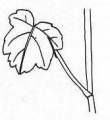 |  |
| |
Character | Leaf Shape | Leaf Margin | Remarks |
Description | | | |
General
Picture |  | 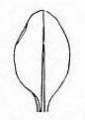 |  |
|
FLOWERS: |
Character | Colour | Basic Flower Type | No. of Petals | No. of Sepals |
Description | Pink-Purple | | 5 | 5 Fused as one single vase-like structure. |
General
Picture | |  | | |
| |
Character | Inflorescence | Description | Ovary | Stamens |
Description | | Five purple-pink petals which have a deep indentation making the petal have 2 distinct lobes. Each petal has an adjoined anther which matures before the 3 central stigma. At the center of the flower there is a white crown-shaped structure (part of the petals) from which the stamens and styles project out. | | |
General
Picture |  | | 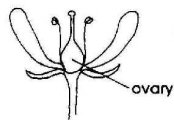 |  |
| |
Character | Scent | Average Flower Size | Pollen Colour | Other Notes |
Description | None | 24mm | White | - |
|
SEEDS: |
Character | No. Per Fruit | Shape | Size | Colour |
Description | About 60 per capsule | Reniform Kidney shape with a serrated jagged outline and prominent groove, making the seeds to be described as being winged. | 2mm | Dark Brown |
General
Picture | | | | |
|
FRUIT AND OTHER BOTANICAL DATA: |
Character | Fruit Type | Colour of Fruit | Subterranean Parts | Other Notes |
Description | | Brown when ripe. (The ovary is completely covered by the vase-like calyx). | | - |
General
Picture |  | |  | |
|
|
| Plant description and characters | |
Life Cycle: | Annual. |
Growth Form: | Therophyte (annual plants, herbaceous, die after fruiting/seeding stage) |
Habitat: | Rocky waysides, uncultivated fields, garigue with enough deep soil, traffic islands. |
Frequency: | Very Common |
Localities in Malta: | Very Common throughout Malta and Gozo. Few examples include Mistra, Mellieha, Ghajn Tuffieha, Siggiewi, Rabat and Mtarfa. |
Plant Height: | Ascending up to 50cm. |
| Dec-May |
Protection in Malta: | Not legally protected till the last update of this website (22/Aug/2025) |
Red List 1989: | Not listed in the Red Data Book of the Maltese Islands |
Poison: | |
An attractive low plant mainly because of its bright pink/purple flowers which contrasts well with the green background. Plant is an ascending annual and will not grow more than half a meter long. The stem is green and have very fine silky hairs. Branching is simple and occurs at the base of the stem and this is accompanied by an opposite pair of leaves at the branching point.
Leaves are small and not very prominent. They are spoon shaped (lower ones) or rounded lanceolate (upper ones) of not more than 3cm length. The leaves also feel silky when rubbed due its fine hairs. Leaves grow in opposite pairs along the stem and pairs are usually at right angles to the adjecent ones above or below (decussate arrangement).
Apart the flower corolla, one of the most prominent parts of the plant is the calyx. It has a vase like structure, being pale green in colour, with ten contrasting dark purple/wine longitudinal striping ribs. The calyx is made up of 5 fused sepals. Several flowers are borne along the flowering stem.
The flower is made up of 5 petals, each being bi-lobed, giving the observer a false impression that there are 10 slim petals. Joined with every petal are 2 stamens of different filament length. At the center of the flower there is a short, white, 10-tooth, crown-like structure formed by 2 dented structures from each petal. From this crown projects out the 5 stamens, and the 3 central styles with a stigma each.
When the flower dies off, the calyx persists where the capsule-shaped fruit develops inside. It produces many small brown seeds, which roughly have a kidney shaped, a rough seed coat and a deep groove.
|
|
| Information, uses and other details |
Personal Observations
Species name
There was a large difficulty to identify the exact species name of this plant. 2 botanical names which describes this Silene present on the Maltese islands were found. These were:
a) Silene colorata
b) Silene sericea.
It could be either that both names apply to the same plant (synonyms) or the names apply to two different species they are very close related. Both possibilities were studied and the name Silene colorata should be used for the reasons described below. [SM]
The book Wild flowers of the Mediterranean [273], the author David Burnie describes the plant S. sericea to have single flowers, or rarely up to 2-3 flower clusters. It is assumed that he meant single or 2-3 flowers per flowering stem. The species in Malta forms several flowers along the stem. In addition, David Burnie mentions that a "related species, the Silene colorata found in the E. Mediterranean, is similar but has flowers borne in clusters."
Additionally, a lecturer of botany in Malta, Mr. Edwin Lanfranco, said that S. sericea and S. colorata are closely-related species that are still diverging from each other genetically (hence, probably a rather young genus). He also stated that the only really reliable feature that can distinguish between S. colorata and S. sericea are the seeds. The seeds of S. sericea have a less pronounced groove and lack wings wheras those of S. colorata are winged [EL]. Unfortunately I don't have seeds or photos of the seeds of the S. sericea for comparison but the seeds of the species in Malta has a well defined groove. .[SM]
More confusion about the nomenclature
On some local botanical/environmental books, including internet sites, this plant is given the English name "red campion". (Example this page from a Maltese site www.my-malta.com). The fact is that this species does not yet have an official vernicular (english) word. [WWW-14] The Latin name for the "red campion" is NOT S. colorata but it is Silene dioica [WWW-14], [272], [WWW-02].
Not much information has been found about this particular plant species. If you can supply further info to be included in this profile, please do not hesitate to email us pr by using the form found at the botom of this page. Full reference credits will be given accordingly. Thank you for your support!
|
|
| Links & Further literature
(2 papers) |

Google Web |

Google Images |

Google Scholar |

Research Gate |

Wikipedia |

JSTOR |

GBIF |

Med Checklist |
Cat. of Life |

EoL |

IPNI |

World Flora Online |

Plants of the World Online |

Vienna Virt. Herb. |

RBGE Herbarium |

KEW Herbarium |
MNHN |

Garden Database |

IUCN |

TROPICOS |
 |
A new species of Silene sect. Dipterosperma (Caryophyllaceae) from Malta |
Salvatore Brullo, Cristian Brullo, Salvatore Cambria, Edwin Lanfranco, Sandro Lanfranco, Pietro Minissale, Saverio Sciandrello And Gianpietro Giusso Del Galdo (2012) |
| |
A new species of Silene sect. Dipterosperma (Caryophyllaceae) from Sicily |
Cristian Brullo, Salvatore Brullo*, Gianpietro Giusso del Galdo, Vincenzo Ilardi & Saverio Sciandrello (2012) |
Kindly Email if there are papers and publications about local
studies or information about this species to be included in the list above.
|
| Photo Gallery (39 Images) |  |
 |
 |
 |
IMAGE: SILCO-01 Photo of the conspicuous purple-pink flower. |
IMAGE: SILCO-02 Photo of lateral view of flower showing the modified ribbed calyx. |
IMAGE: SILCO-03 Another lateral view photo of flower showing the calyx. It is a fused tubular structure with longitudinal maroon ribs. |
IMAGE: SILCO-04 Close up view of central part of flower showing the white flaps (10 in number) at the mouth and the 3 white stigma protruding out. |
 |
 |
 |
 |
IMAGE: SILCO-05 Close up photo of the flower consisting of 5 petals wich fork into 2 lobes, making appear as if the flowers is made up of 10 slim petals. |
IMAGE: SILCO-06 Photo of a mature flower showing the 3 long and feathery white stigma. |
IMAGE: SILCO-07 Photo of flower (side view) showing the conspicuous vase-like calyx with longitudinal purple/maroon ribs. Also visible are the three feathery stigma. |
IMAGE: SILCO-08 Close up photo of flower showing some mature stamens. The anthers drop soon after they are fully mature and shed their pollen. |
 |
 |
 |
 |
IMAGE: SILCO-09 Close up photo of flower having stamens with white pollen. |
IMAGE: SILCO-10 Another Close up photo of the ventral side of the flower. |
IMAGE: SILCO-11 Photo of a young flower showing the stamens (and stigma in between) protruding out from the central opening of the corolla, decorated by 10 white, triangular flaps forming a small crown. |
IMAGE: SILCO-12 Photo of flower (back view) showing in detail the striped calyx. |
 |
 |
 |
 |
IMAGE: SILCO-13 Side-view photo of flowers showing the petals being slightly curved in. |
IMAGE: SILCO-14 Close up photo of central part of flower (side view), showing in detail the white crown-like structure and 3 of the stamens which produce cream/white pollen. The old flower at the right possess the 3 long, curved and feathery stigma. |
IMAGE: SILCO-15 Scanned image of the purple stamens and styles (petals removed). There are 10 stamens per flower of unequal length and maturity. (2 stamens missing in the photo). |
IMAGE: SILCO-16 Scanned and annotated image of one petal and its adjoined stamens (2 per petal). |
 |
 |
 |
 |
IMAGE: SILCO-17 Scanned image of the flower. |
IMAGE: SILCO-18 Scanned image of flower against a dark background. |
IMAGE: SILCO-19 Scanned image of 3 flowers at different maturity stages. Stamens are first to develop in young flowers, which eventually their anthers fall off, leaving only the 3 white styles which develop later and seen in older flowers. |
IMAGE: SILCO-20 Scanned image of dissected petals showing details from every plane of view. Note the adjoined stamens and the 2 white teeth forming the crown. |
 |
 |
 |
 |
IMAGE: SILCO-21 Scanned image of a longitudinal section of a young flower showing reproductive organs of the plant and their arrangement. |
IMAGE: SILCO-22 Scanned image of a longitudinal section of a mature flower showing reproductive organs and their arrangement. |
IMAGE: SILCO-23 Scanned image of the calyx (bud) which have a vase-shaped structure with 10 longitudinal purple ribs. The fruit and the buds are quite similar in structure. |
IMAGE: SILCO-24 Scanned image of the flowering part of the flower including a flower and 2 calices. |
 |
 |
 |
 |
IMAGE: SILCO-25 Photo of plant neae the coast. Such specimens tend to have thicker/fleshy leaves. |
IMAGE: SILCO-26 Photo of the plant in situ producing several eye-catching purple flowers. |
IMAGE: SILCO-27 Photo of the plant in situ. It is a low ascending plant reaching a maximum height of about 50cm. |
IMAGE: SILCO-28 Scanned image of plant showing various characteristics as annotated on the image itself. |
 |
 |
 |
 |
IMAGE: SILCO-29 Scanned image of 2 young (left side) and 2 adult leaves. They are simple spatulate leaves with an entire smooth margin. |
IMAGE: SILCO-30 Photo of the colourful vase shaped fruit in situ. One of the fruit is ripe and has a light brown colour. It forms an opening at the top from which the brown seeds inside escape the fruit with swaying of the stem by wind. |
IMAGE: SILCO-31 Photo of a ripe fruit being a capsule with crown shaped mouth. Visible are the numerous brown seeds inside. |
IMAGE: SILCO-32 Scanned image of fruit (side view). |
 |
 |
 |
 |
IMAGE: SILCO-33 Scanned image of seed capsule, clearly showing that it is divided into 3 compartments. |
IMAGE: SILCO-34 Magnified scanned image of seeds. They are dark-brown, kidney shaped seeds with the outer curved part having a rough texture with several stiff projections. They also have a well developed longitudinal groove. |
IMAGE: SILCO-35 Magnified image of seeds under light microscope, showing their kidney-shaped structure. |
IMAGE: SILCO-36 Magnified image of seeds under light microscope, with one of the seeds placed upright to show the deep longitudinal groove. |
 |
 |
 |
| IMAGE: SILCO-37 Photo of several flowers taken at Dingli (Hal-Tartarni Street) on Mar 2005. The fern-like leaves are not those of the Silene. |
IMAGE: SILCO-38 Group of closely packed flowers taken at a traffic island in Mtarfa (Ghajn Qajjet Street) on Mar 2003. |
IMAGE: SILCO-39 Photo of many flowers, very common in Malta in Feb-Apr. |
IMAGE: SILCO-40 |
|

Sales and Donations

|
 |
Sales of seeds of wild plant from Malta: Seeds of selected wild plant species may be available for academic studies, research purposes, or personal use. Please note that not all species can be supplied or exported. Availability is subject to seasonal seed production, stock levels, and applicable regulations, including Maltese legislation and CITES requirements where relevant. Protected and endemic species cannot be sold (at least without the relevant environmental permits).
How it works: First, submit a quotation request by completing the Online Quotation Form (link provided on the right side of this table). Once your request has been reviewed, you will receive confirmation regarding seed availability, export eligibility (where applicable), pricing, and any transport charges. Payments are accepted by Revolut, bank transfer (IBAN), or PayPal only; credit and debit card payments are not accepted.
Please note that local orders are currently not being accepted. Seek Maltese nurseries and NGOs for local orders.
|
Online Quotation (Seeds)
|
 |
Buy Images: Purchase photographs from this extensive online collection of Maltese flora by Stephen Mifsud. Images are available at reasonable prices, with rates varying according to image size and resolution. Your purchase helps support the maintenance and development of this website. When placing an order, please note the image code displayed beneath each photograph on the corresponding species page, as this is required when completing the online order form. Images are normally supplied under a license agreement, with copyright retained by the author; however, the sale of copyright for exceptional images may be considered on request.
|
Online Purchase (Images)
|
 |
Support this ad-free website Kindly consider to support this website by giving a small donation which will help to cover some expenses needed to pay the webserver and domains, maintain the website without any adverts, upgrading the code, including more wild plants and photos, and adding further data amongst other developments. You can use the links on the right for direct donations to this website by PayPal or Revolut. Even a 5 or 10 Eur donation is appreciated. Remember this website was ad*free since its launch back in 2002 and has served as an environmental educational tool for over 20 years.
|
💙 Donate by PayPal
💳 Donate by Revolut
|
|
| Contribute Information or Report Errors |
Use this form to submit additional information about this species or to report any inaccuracies on this webpage.
If the information you provide is sourced from a book, journal, website, or any other publication, rather then your own information or experience, then please include the relevant reference or web address whenever possible. Your email address will be used solely for internal communication and will not be shared. We greatly appreciate reports of: taxonomic updates; species misidentifications; incorrect or outdated information, broken links, technical website issues, or any additional information specific to the plant in this webpage.
Your contributions help to improve the accuracy and quality of this website. Thank you! Fill any of the three sections (A/B/C) below: .
|
|
|
|
Webpage is copyright of Stephen Mifsud / www.MaltaWildPlants.com - (2002-2026)
| | |